History
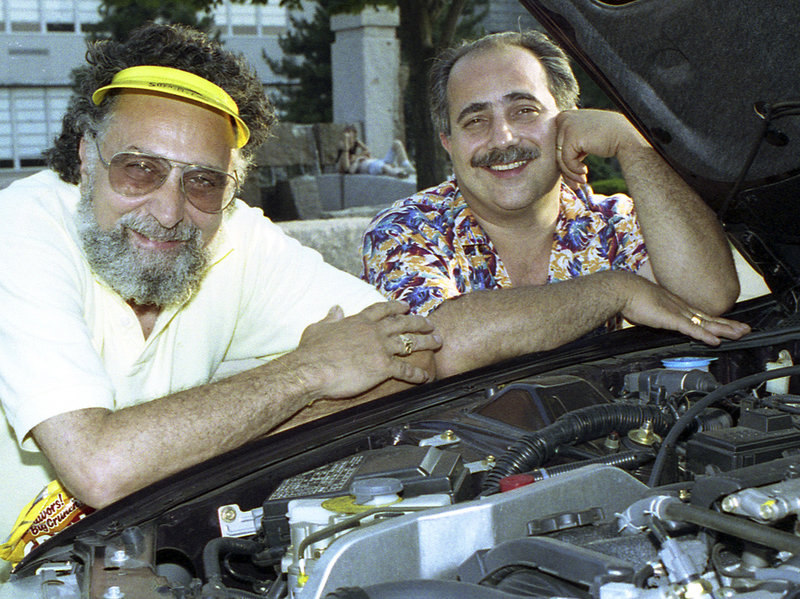
Learning about the brother’s history is important so that we can understand why it is they communicate the way they do today. The brothers were born seven years apart, and they were both born in Cambridge, Massachusetts. Tom is the one known as Clack. He has a Bachelor of Science in Economics Policy and Engineering, as well as a PhD in Management. He attended MIT, Northeastern University, and Boston University. Clack was married and had three kids before he died in November of 2014. Ray, also known as Click, has a Bachelor of Science in Humanities; he also attended MIT. He is currently married with two kids. They quickly became interested in cars while growing up after helping their dad work on cars. “Tommy took apart and rebuilt our dad’s heap over and over again – each time having a few extra parts, until eventually there was nothing left to dissemble”. (History of Car Talk) In the 1970s, the brothers, having a high interest in cars, started their own do-it-yourself car garage business in Massachusetts, called Good News Garage.
In 1977, Tom received a call from a director at WBUR which was a small radio station produced by a college. They asked Tom if he would come join their panel of car enthusiasts on their car show. When Tom showed up to be on the show, it just so happens he was the only one that showed up that day. Even without other people to help him on the show he did a great job and had a great time doing it. Due to Tom’s fun Boston accent and great job communicating, the show wanted him to come back and do it again. Tom was asked to return for next week’s show. When he returned the following week, he had found that the station director had actually been fired. However, the station director had left Tom a letter. Part of the letter stated “You’re on your own, have a good time, and try to watch your language.” (History of Car Talk) The following week Tom brought his brother Ray along to join in on the broadcast. During these early years of the show the brothers would only answer three questions throughout the hour and a half show. The brothers were also paid about $20 a week for their efforts. The brothers were very good at filling up time by joking around and going off on tangents as the brothers were able to talk a lot. They also came up with a new idea for their show called the “Puzzler” which they communicated as a quiz they would give their audience about cars, and at the end of their show they’d give the answer. This puzzler idea actually substantially increased their audience. This history shows that along with humor, communication skills, and educational background these things combined to create a Peabody award winning show.
A woman named Susan Stamburg of Weekend Addition on NPR asked them if they would come in and join her show. Another person also claims credit for discovering them, Robert Seigel who is the host for All Things Considered. “It was later determined that Seigel suffered from a rare, transient brain parasite that normally infects bull moose during rutting season, which only partly explains his bizarre decision” (History of Car Talk) This was one of many types of responses to their self-deprecating humor. Their first show on NPR went so well with Susan Stamburg they ended up getting their own show called Car Talk, which launched nationally. Due to the show’s newfound success they were forced to start their own company called Dewey, Cheatem, and Howe in order to hire staff to assist them. They quickly gained national attention and even were invited to be on Jay Leno’s Tonight show.


NPR/Radio Industry

The radio industry has come a long way. National public radio average weekly broadcast audience is 28.5 million listeners. According to the U.S radio industry 90% of adults listen weekly. There are over 15,500 radio stations in the U.S. It generated over 14 Billion dollars. The average American listens to about 106 min per day (Fuller). The general industry around talk radio is increasing with new stations appearing by the week. You can now listen to podcasts on many different platforms including Spotify, ITunes, Google Play Music, Stitcher, and many more. The fact that this show was created as a public media show and not a commercial show made for profit also made it easy for listeners to want to keep tuning in. The public are generally more inclined to support radio shows of this type.
Source: Www.Statistica.com,https://www.statistica.com/topics/1330/radio/.
Role In communication

Cultural communication is evident in this National Public Radio classic show. After listening to many episodes of the show it is evident that the majority of people who call in for questions are generally of the middle class and mostly from the east coast. The audience tends to easily relate to the brothers with their east coast humor and dialect. For example, joking about the harsh Boston winters, and how those winters adversely affect cars. The audience seems to appreciate the brothers honest and direct answers combined with their humor. For the most part many people have at least a small interest in cars as they are necessary to carry you from point A to B. However, a large portion of people that listen to the show are do-it-yourself type people that really know the ins and outs of automobiles. As you can see, cultural communication plays a large role in this show and fulfills the needs of social class and regional communication.
A Ritual View of Communication is a theory by James W. Carey. This theory is “The construction of symbolic reality-represents, maintains, adapts, and shares the beliefs of a society in time.” (Ritual view of Communication) One aspect of this theory is sharing. The Car Talk show shares information through automotive explanations. It also shares humor through the Tappet brothers engaging wit. The next part of the ritual view is participation. Viewers can participate by calling in and asking their car questions, by participating in the puzzler game and allowing themselves to get made fun of by the brothers. The next part of the ritual view is association. The show Car Talk is associated with National Public Radio because National Public Radio is a wide-ranging industry that includes large swaths of information from automotive to social information. The final part of ritual view communication is fellowship. The brother’s partnership is a relationship that is respected by many. Their fellowship is a bond that is evident to the listeners. This theory can relate to Car Talk because it is an act that people listen to over and over again. According to Carey “The ritual act, then, becomes part of a shared culture, and according to the ritual view is maintained through time.” (Wiki)
In one episode of Car Talk called The Fraternity of Teenagers, episode number 1335, there are various modes of communication within the show. The relationships include the mother/son relationship, the boy/girl relationship, and the Tappet brother’s relationship with the women. Communication between siblings is always important, however, with this show in particular it is absolutely vital. A woman named Terri calls in and she explains how her son is interested in buying a 1965 Camaro. “Tom and Ray are ready to back her up with a trunk full of reasons why he’s more likely to meet girls if he’s driving a 1986 Volvo (with mismatched hubcaps)”. (1335 The Fraternity of Teenagers) The brothers explained with their humor and mastery of cars to the women and her son that that buying a 65 Camaro would be a ridiculous choice. This communication between brothers relates back to James Carey’s ritual model of communication. Helen Anderson states information on siblings and communication. It is interesting how their communication style can be listened to on many outlets including cyberspace and by podcast. These things weren’t even around when James Carey first came up with this theory. (Anderson) In The Fraternity of Teenagersepisodes many modes of communication between the brothers, audience, and people who call in are put on display. The talk radio industry is a lucrative business that displays a wide range topics and has had an important historical impact. The history of talk radio goes back over a hundred years. In fact, the Smithsonian celebrated the 100thanniversary back in 2010. An inventor named Reginald Fessenden started the first talk radio in 1906, he broadcasted a holiday special. Listeners at that time were known as fans (which was a term used derogatorily to indicate that a person was not actively engaged in both sides of the radio broadcast) (Radio Activity).
Sources: https://en.wikipedia.org/wiki/Ritual_view_of_communcation
Anderson, Helen.Siblings in Cyberspace: Carey’s Ritual model of Communication in the Digital Age .Stanford University-Article Text-1201-1-10-20111016.pdf
Audio Clip/Source: https://www.cartalk.com/radio/show/1335-fraternity-teenagers#
“Never let the facts stand in the way of a good answer.”
Tom magliozzi

 Slade Dumas